
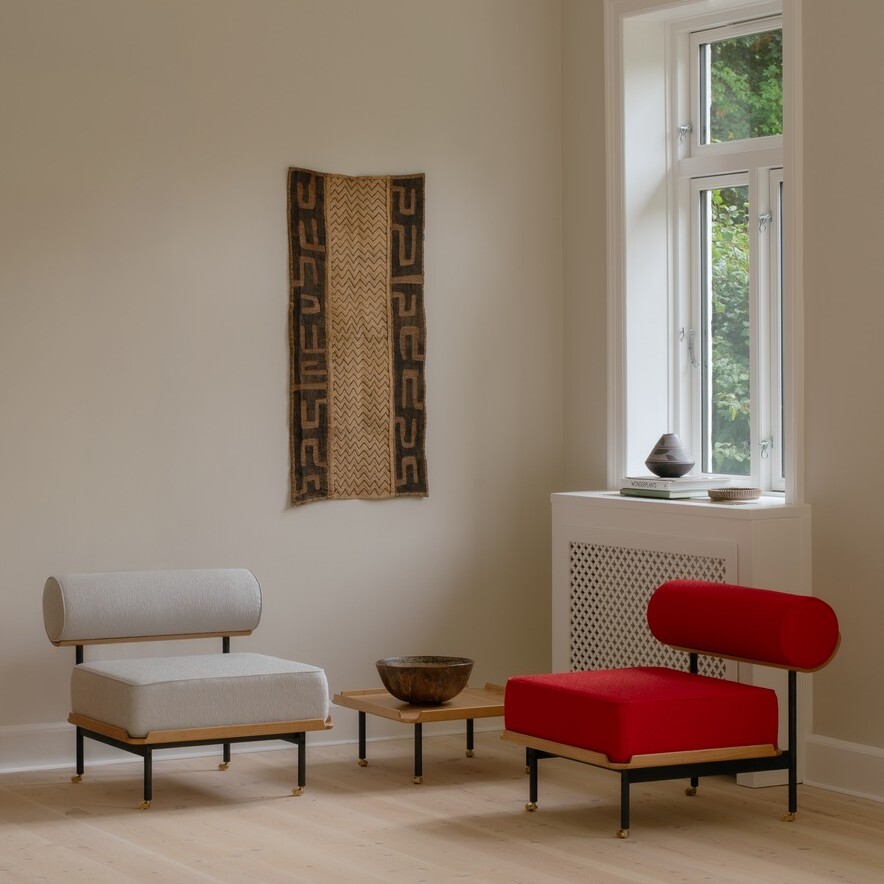
I’ve lost count how many times I’ve visited Finn Juhl’s house in Ordrup over the years, but needless to say this mid-century masterpiece, just north of Copenhagen never fails to inspire.
Built and furnished when the Danish architect and designer was only thirty years old, this modest, modernist abode offers sightseers such as myself, the perfect opportunity to experience his exceptional work up close. Filled with iconic pieces such as the Chieftain Chair, the Poet Sofa and the Judas Table to name just a few, it is in fact the beautiful bedroom interior that is currently a hot topic amongst design fans.
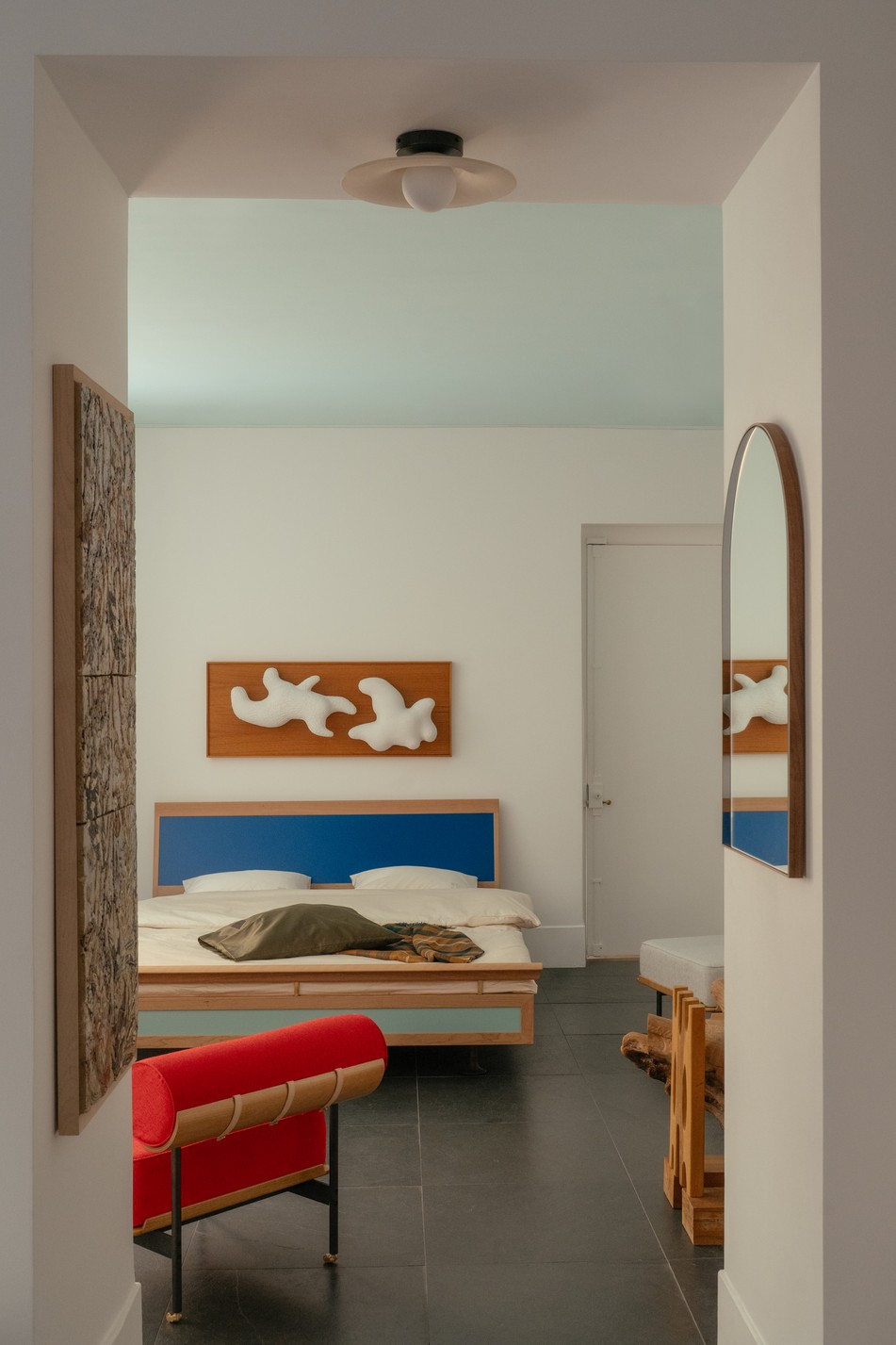
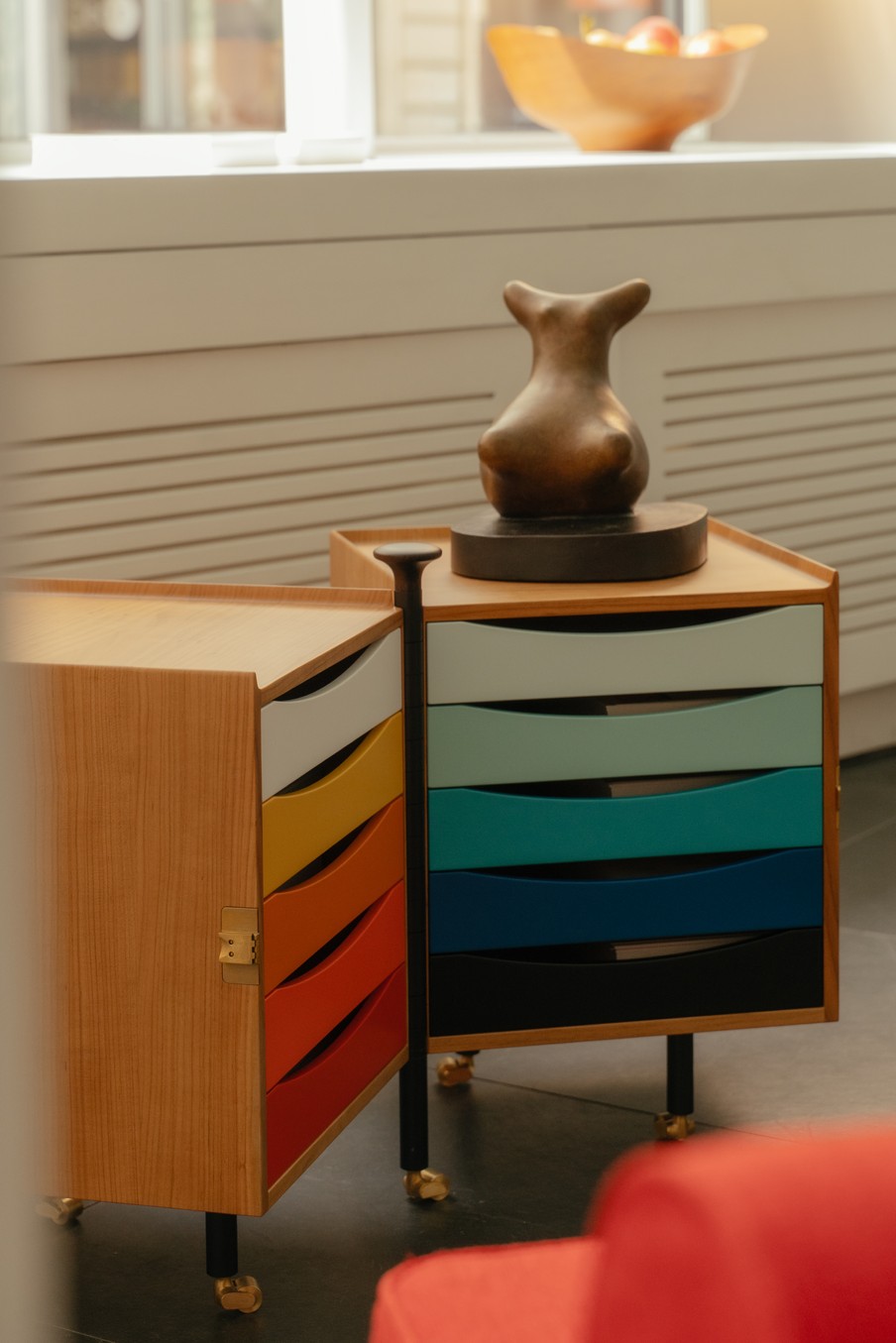
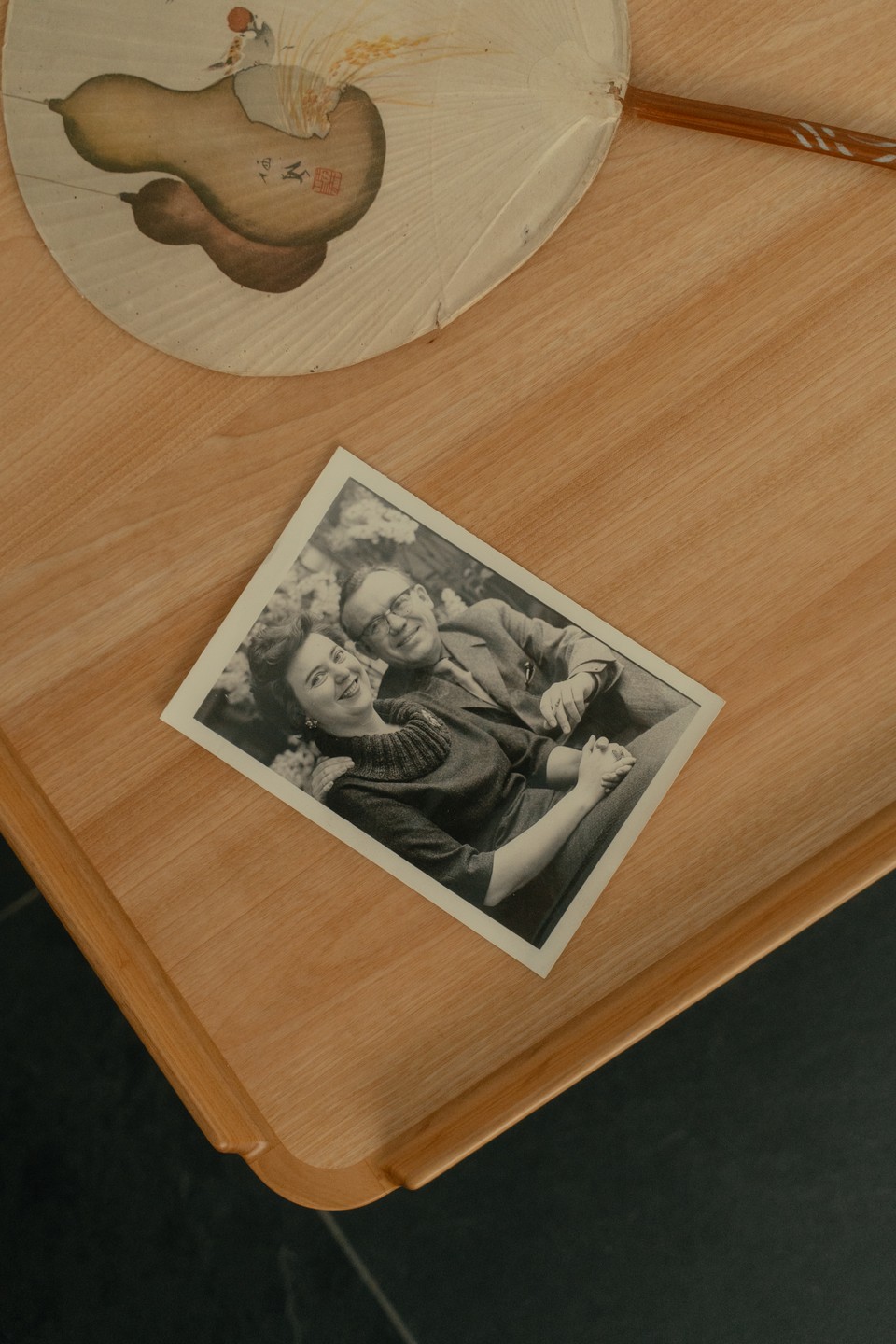
Relaunched by House of Finn Juhl during Paris Design Week at the gallery Triode Design, and comprising of a bed, two lounge chairs, a small table, and a glove cabinet, this bold and bright collection dates back to 1961, and was dedicated to his partner, Hanne Wilhelm Hansen (yes, the lady in THAT portrait).
A love letter written in furniture, this remarkable collection is one of the most personal and unconventional of Finn Juhl’s career, and it’s hard to believe it divided critics and taste makers at the time. With reactions ranging from fascination to rejection, it marked a dramatic move away from the forms that had made him famous two decades earlier, and instead explored what was seen as radical new materials, colour combinations, and ways of shaping the home.
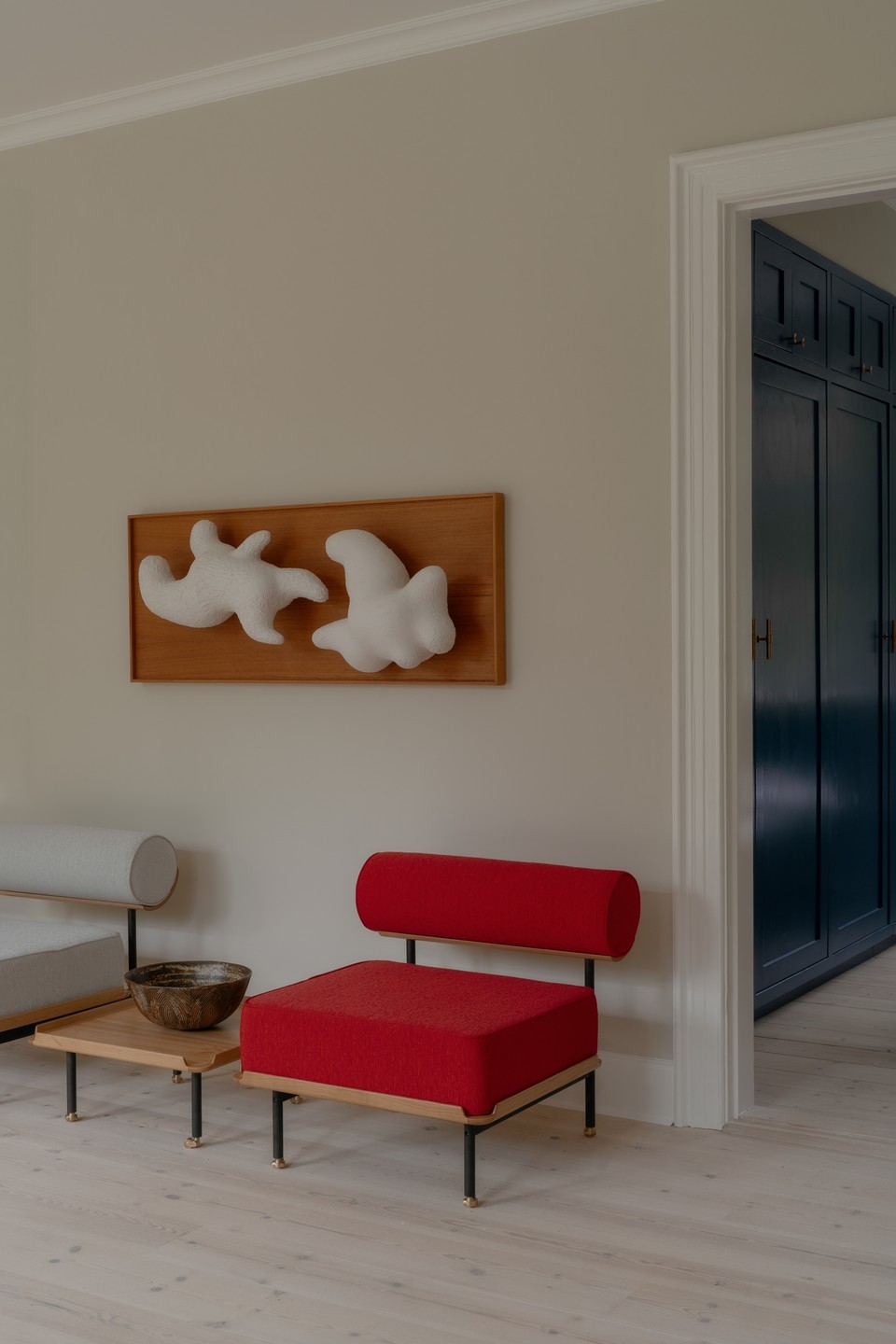
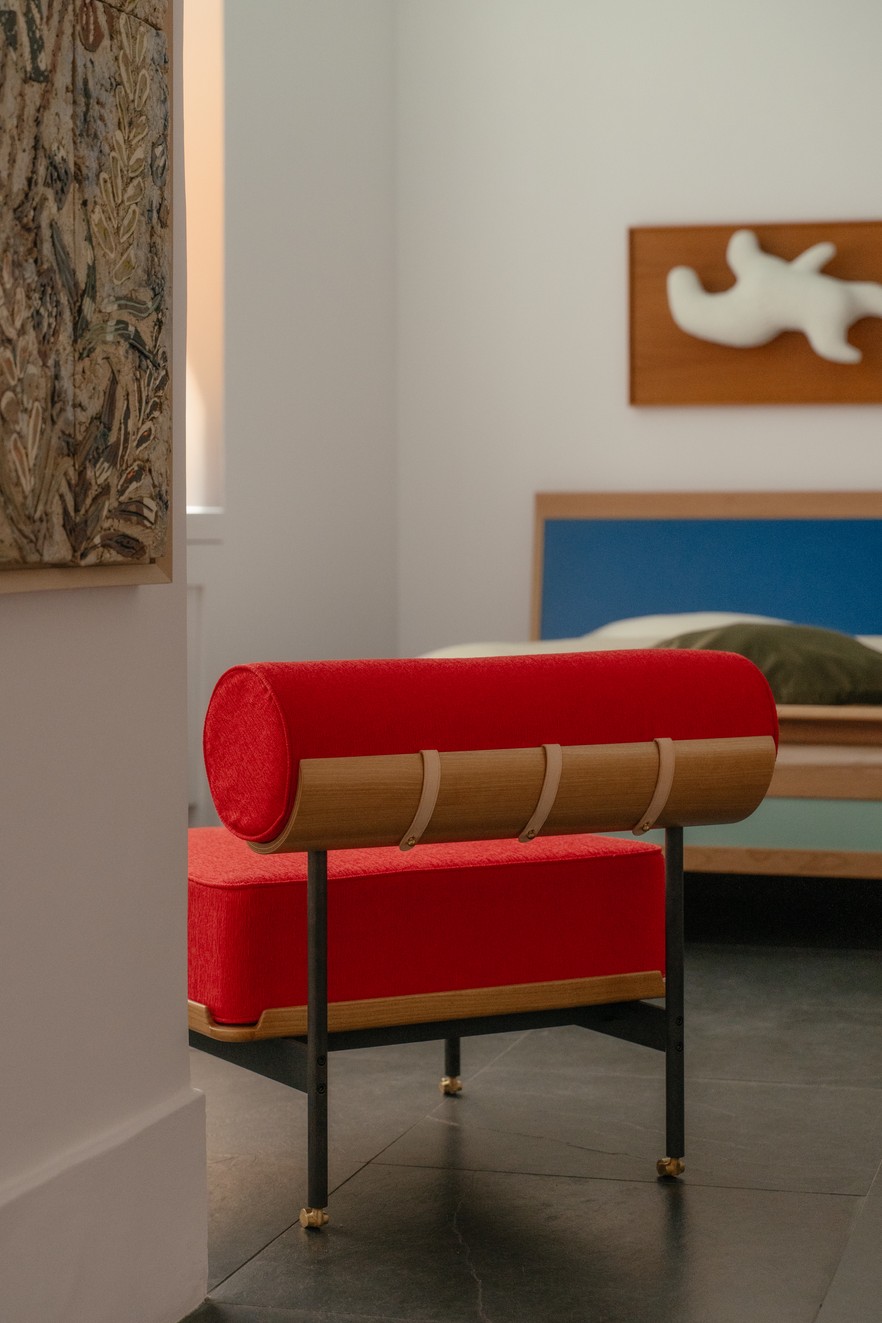
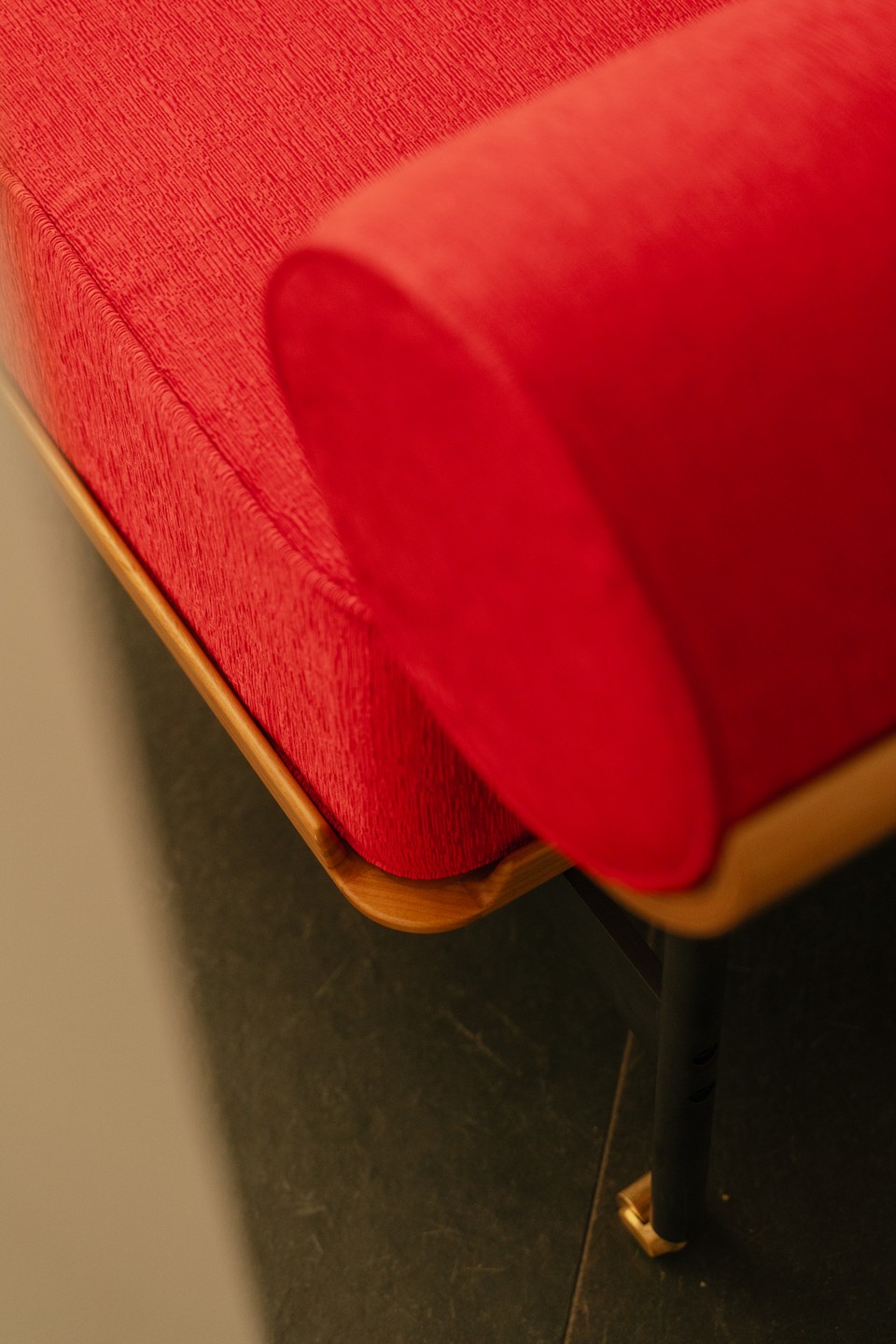
Firstly, the Television Chair, characterised by its cylindrical backrest and distinctive combination of wood and steel, was quite the departure. And, in Finn Juhl’s original watercolour drawing, which also bears the name Television Chair, he depicts it upholstered in a shocking red Thai silk.
Meanwhile, the small Television Table to accompany it has angled edges, which open elegantly toward the sides, while its notably low height makes another clear reference to Asian aesthetics. Like the now infamous Glove Cabinet, the Television Chair and Television Table are both crafted from cherry wood, with burnished steel frames and casters in untreated brass.
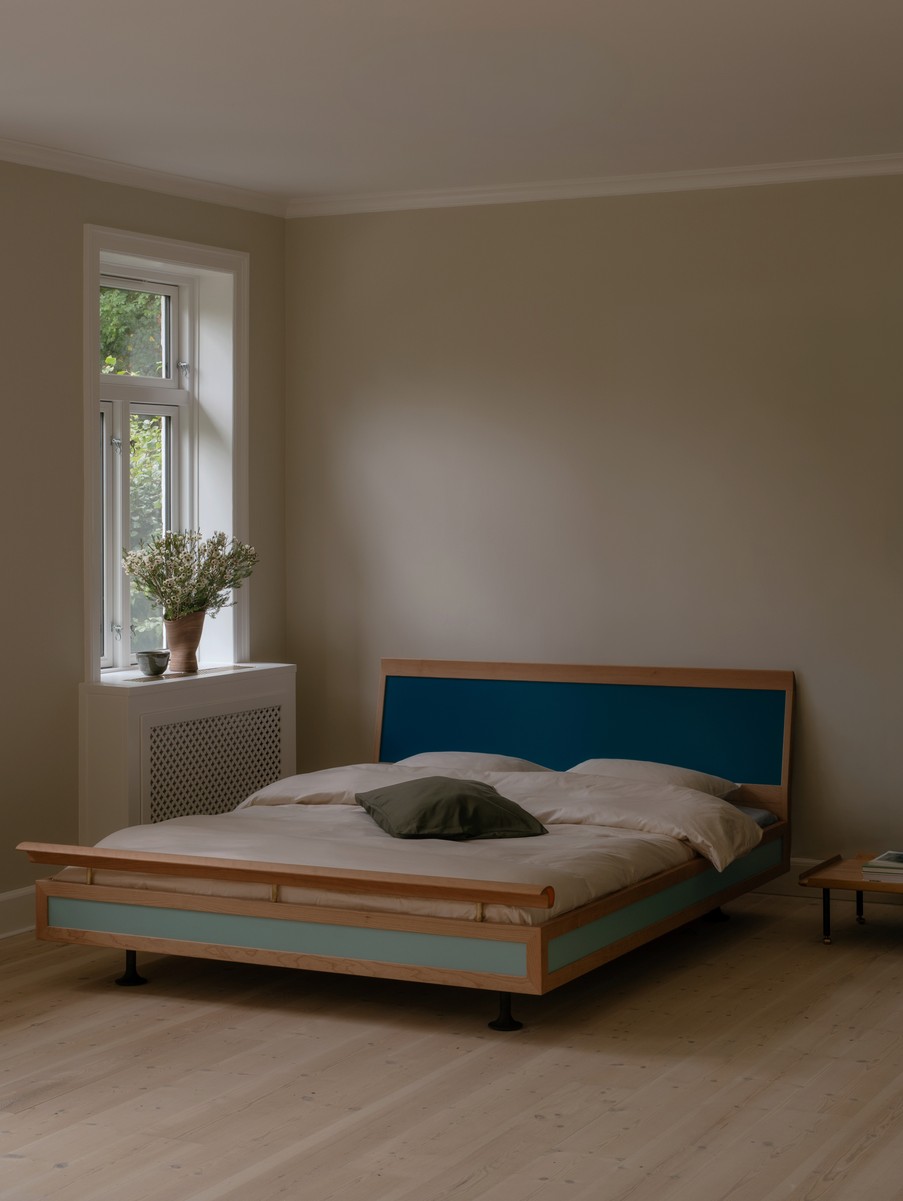
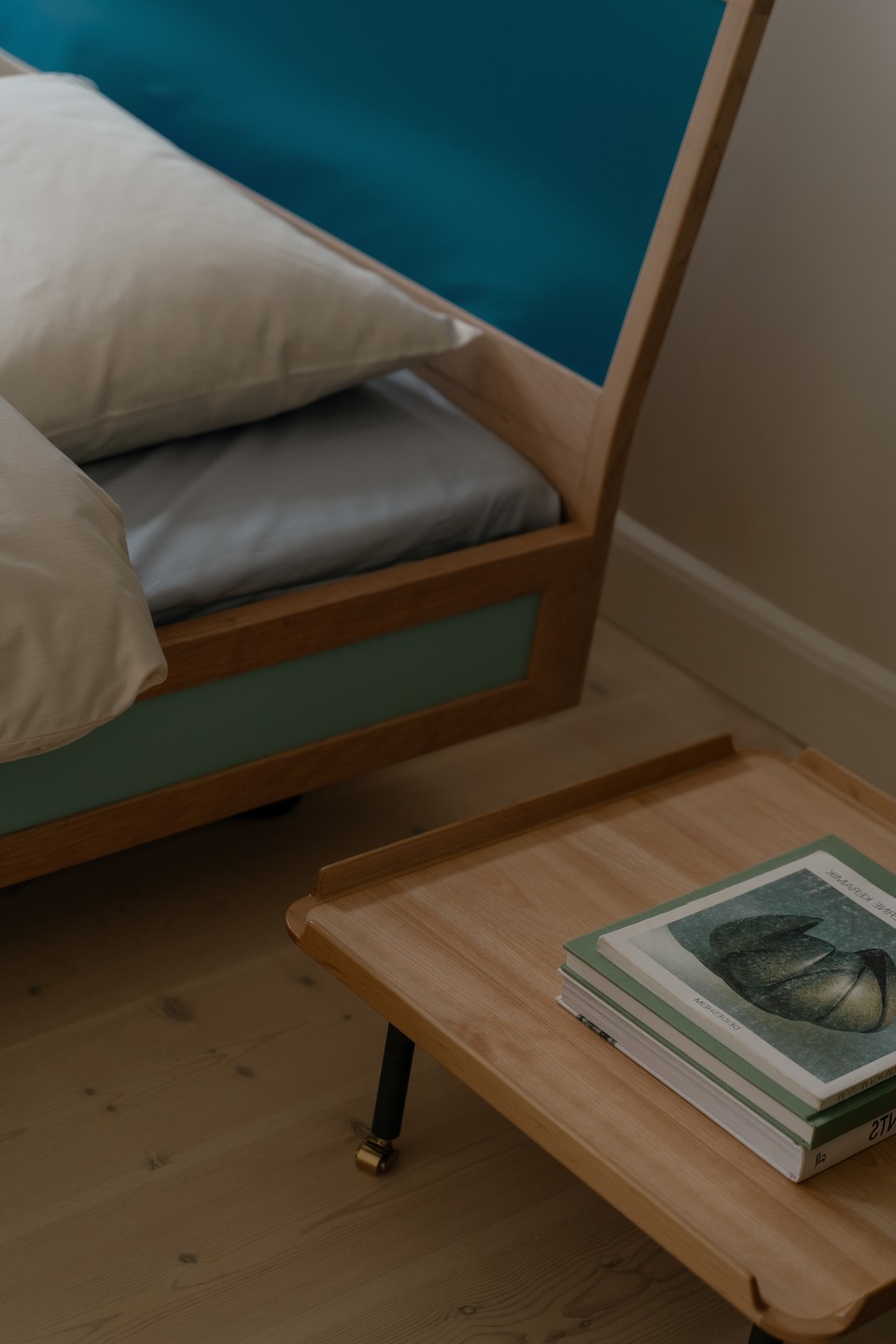
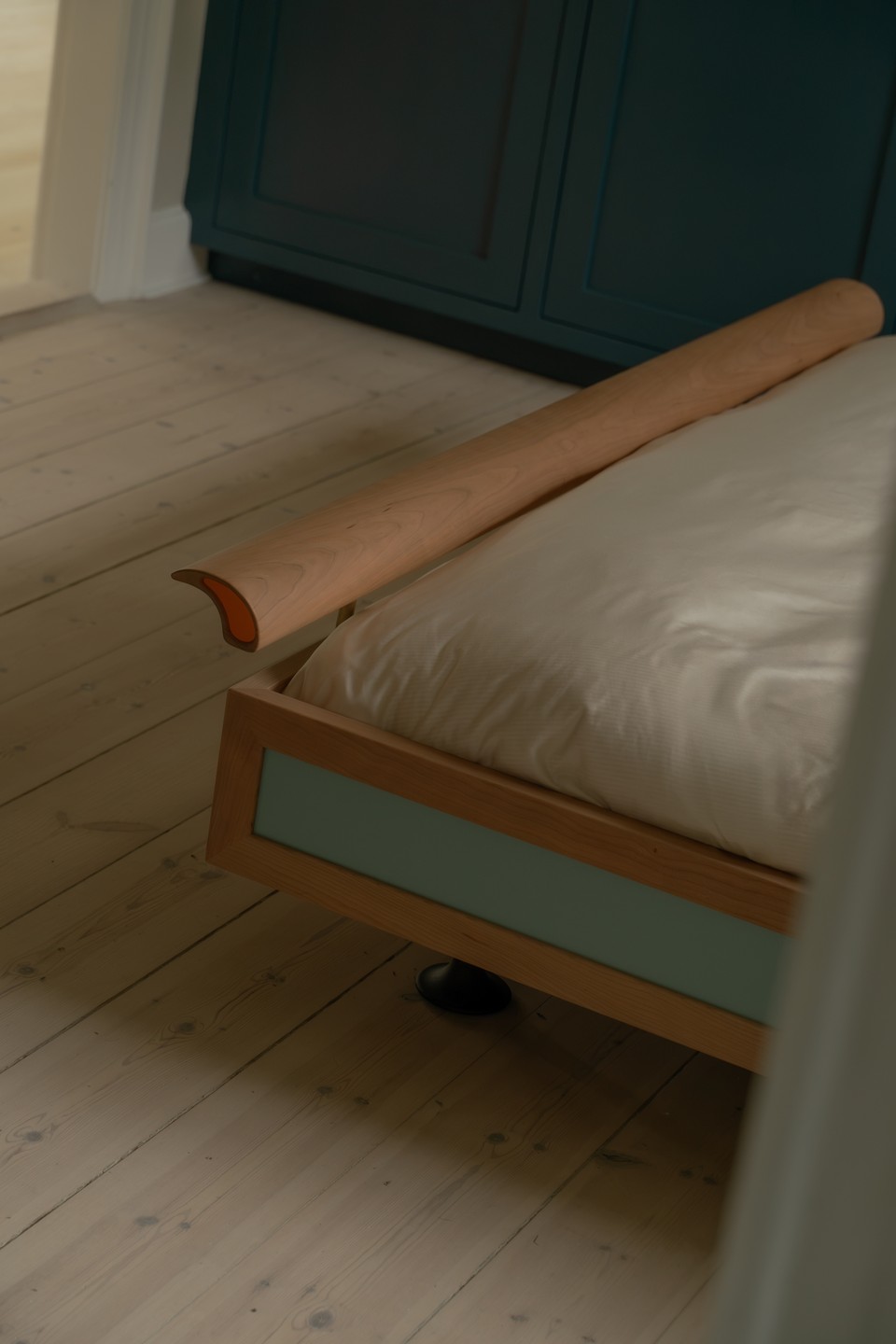
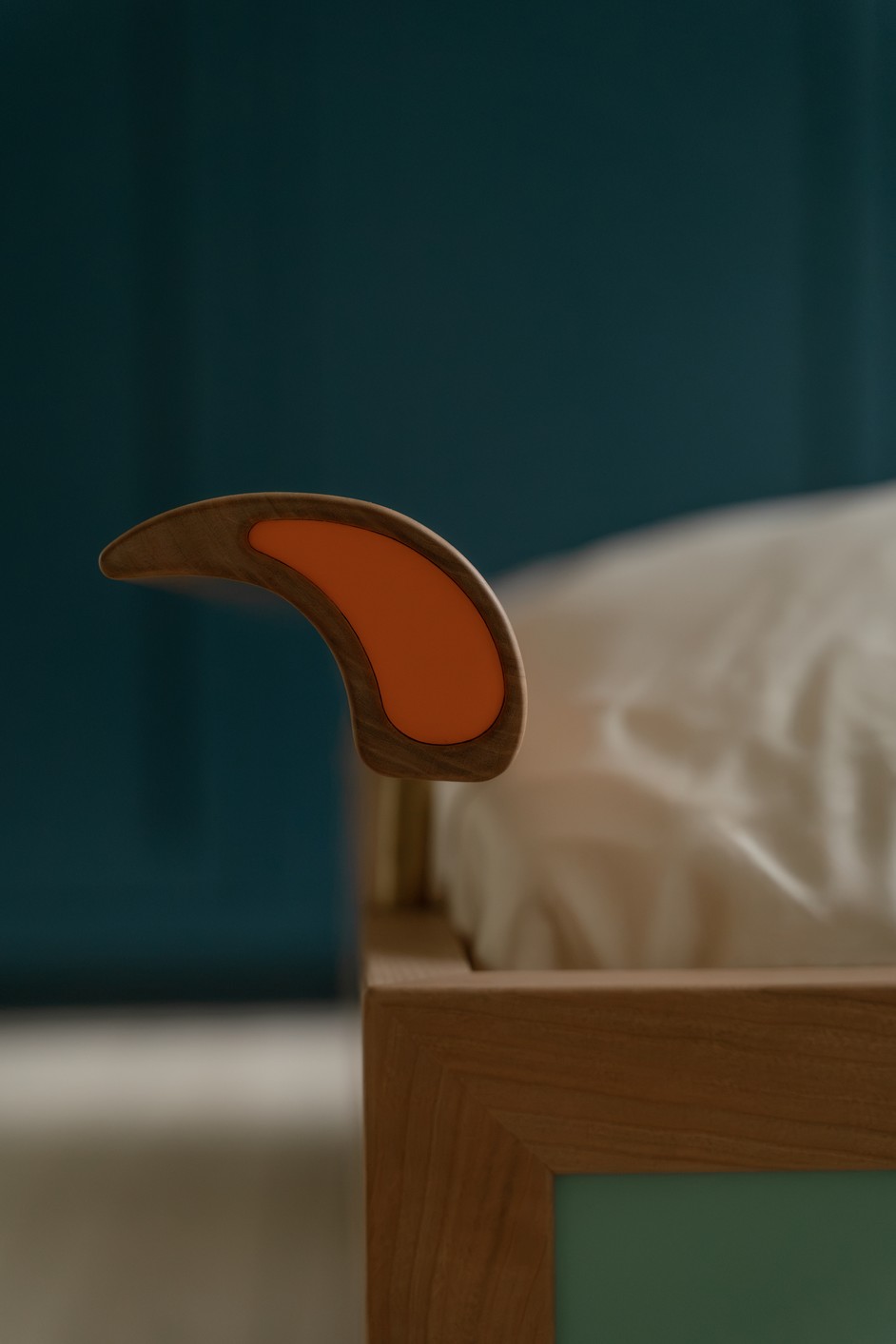
However, it’s the Wilhelm Hansen Bed that is the central piece of course. The sculptural construction is again made from cherry wood, but this time it incorporates wengé details, as well as an internal frame and slats in pine. Almost floating in its appearance, the sides and headboard, along with the drop-shaped detail on the footboard, feature several painted areas too, inspired by Goethe’s theories of colour and referencing the same tones found on the drawers of the Glove Cabinet.
Now seen through a contemporary lens and available to buy once more, the relaunch of the bedroom interior brings an overlooked chapter of Finn Juhl’s work back into the spotlight while giving new life to a deeply personal story of love, creative freedom, and the courage to forge one’s own path.
Find out more
To find out more about House of Finn Juhl, and the relaunch of the bedroom interior, visit their website.
All images courtesy of House of Finn Juhl.
Enjoyed this post? Then read about another leading Danish designer, Poul Kjærholm and his collection from Fritz Hansen


Leave a Reply